


Antique Etruscan Marquetry Panel
£2,500
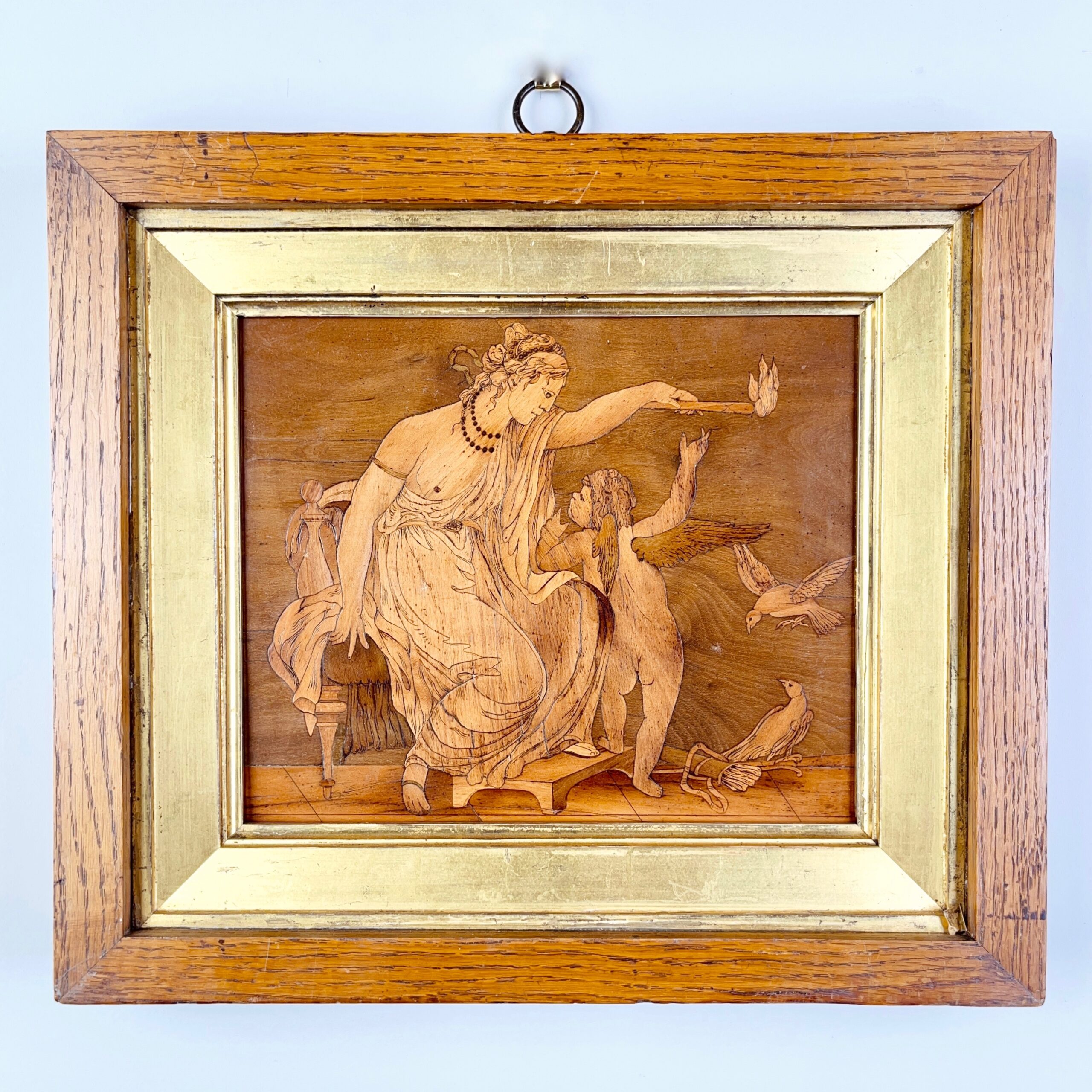
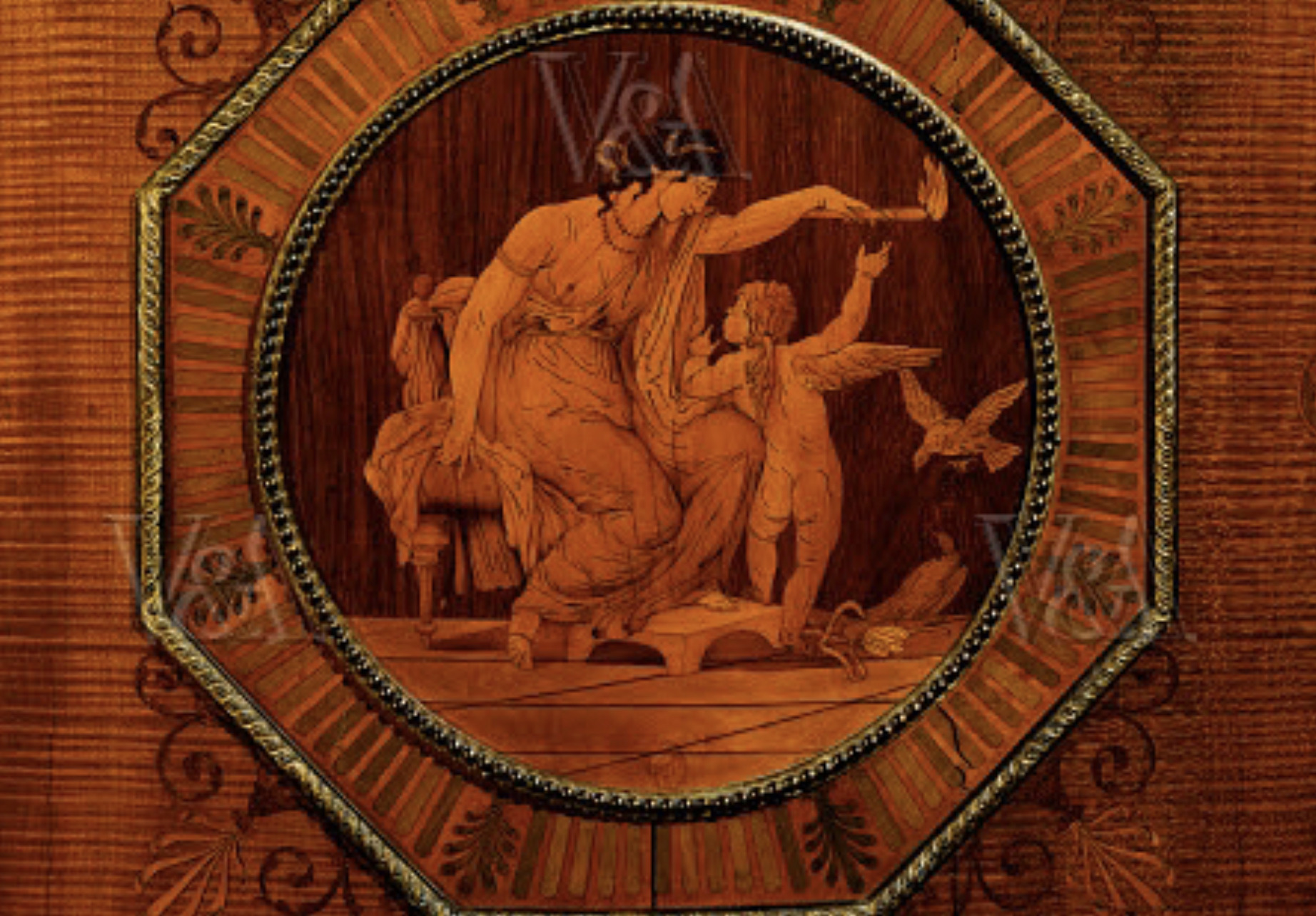
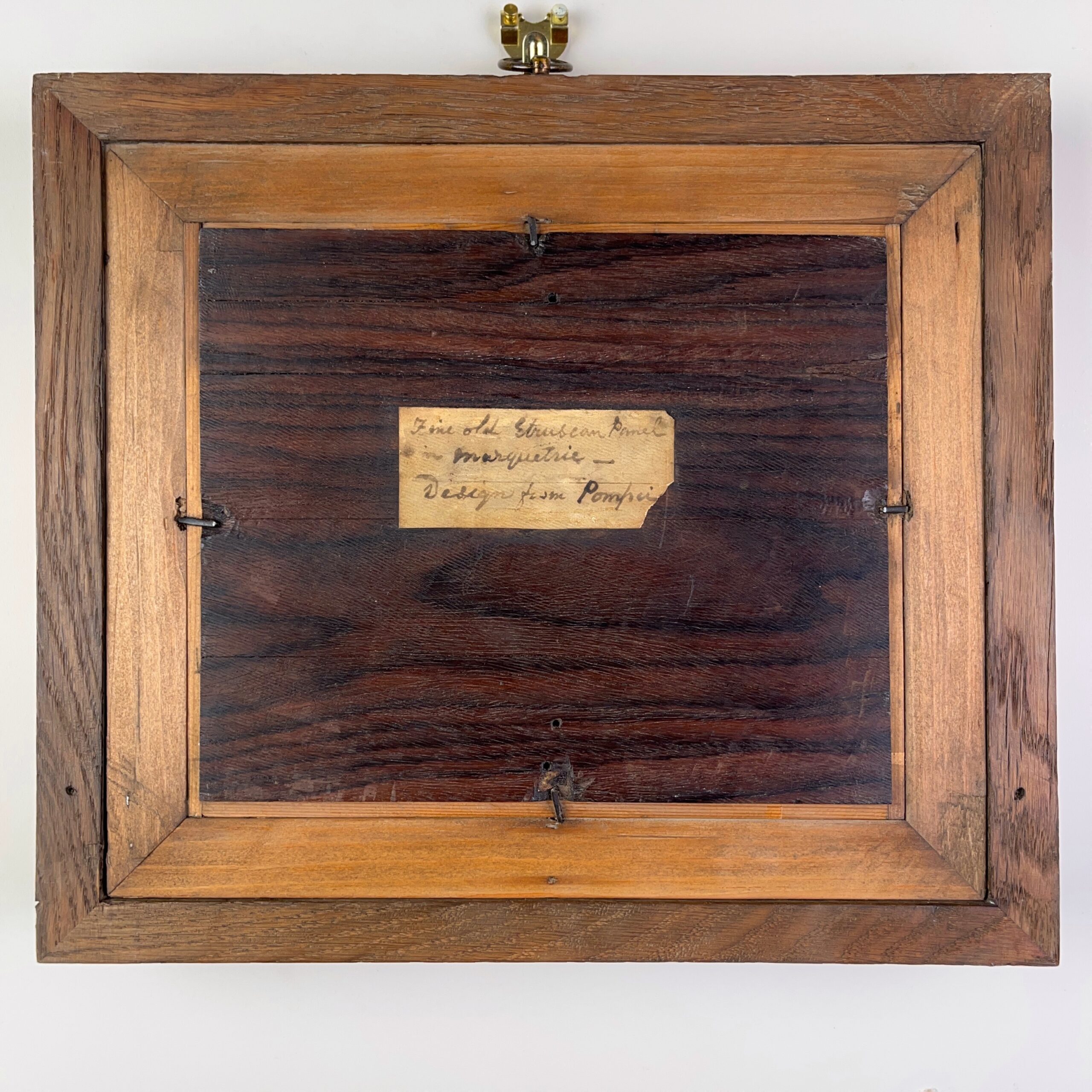
A fine marquetry panel depicting Venus and Cupid with doves attributed to George Haupt and Christopher Fürloh. The old label on the back states the source as a fresco found at Pompeii, though we have yet to trace this particular scene. The same panel features on one of a pair of commodes at Osterley Park which were commissioned by Robert Child, designed by Robert Adam and attributed to Linell, the marquetry attributed to George Haupt and Christopher Fürloh. This marquetry panel was possibly produced in the same pack of veneers as the central panel from the Osterley commodes, as indicated by the undulating outline of Venus’ right breast.
Presented in an oak frame with gilt-wood slip.
The Osterley Commodes
There was a delay of some three years before the Childs turned their attention to the drawing room where the magnificent pair of elliptical marquetry commodes ordered for the pier walls are among the finest pieces of furniture to be preserved in the house. They are veneered with harewood, satinwood, rosewood and other woods and richly mounted with ormolu, including a tablet in the frieze consisting of winged griffins supporting a portrait medallion. There is no doubt that these commodes owe their design to Robert Adam. He intended their side panels to be ornamented with figures in oval frames and their central panels with a classical subject in a roundel set within an octagonal frame. He may have taken the latter feature from the ceiling of the great drawing-room at Syon House where G. B. Cipriani had painted figure subjects in roundels within octagonal surrounds.64 As the figures on the drawing-room commodes were to be painted it is possible that he had originally planned their execution by Cipriani. However, this did not materialise. Instead, the decoration was carried out in marquetry. Both the subjects illustrated in these marquetry panels and the way in which the commodes are constructed, has been discussed at length in Chapter S. The evidence suggests that the pieces may have been supplied by the Linnell firm but were set with marquetry obtained from George Haupt and Christopher Fürlong or from one of their compatriots working in London.