Wall Lights, Lanterns & Sconces
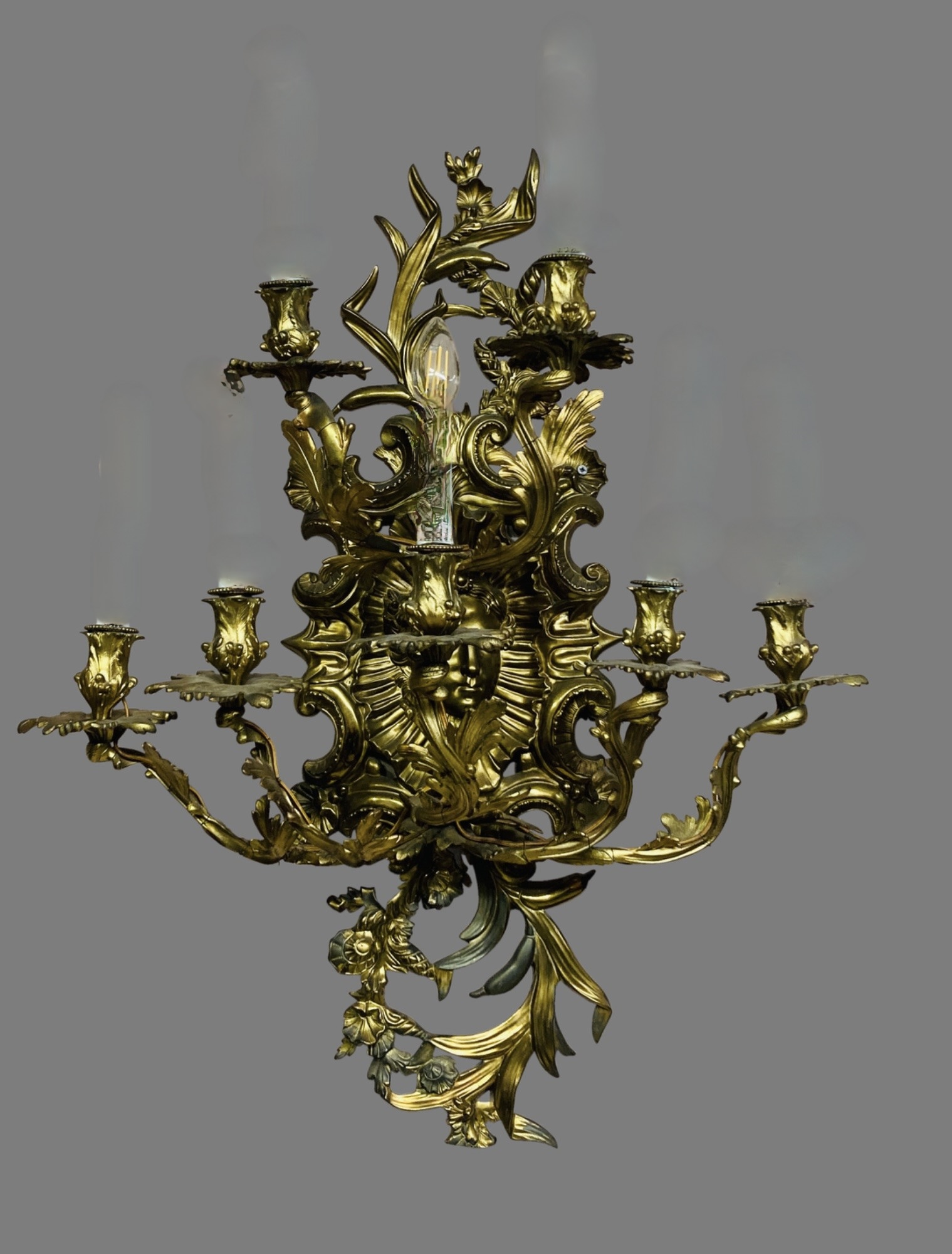
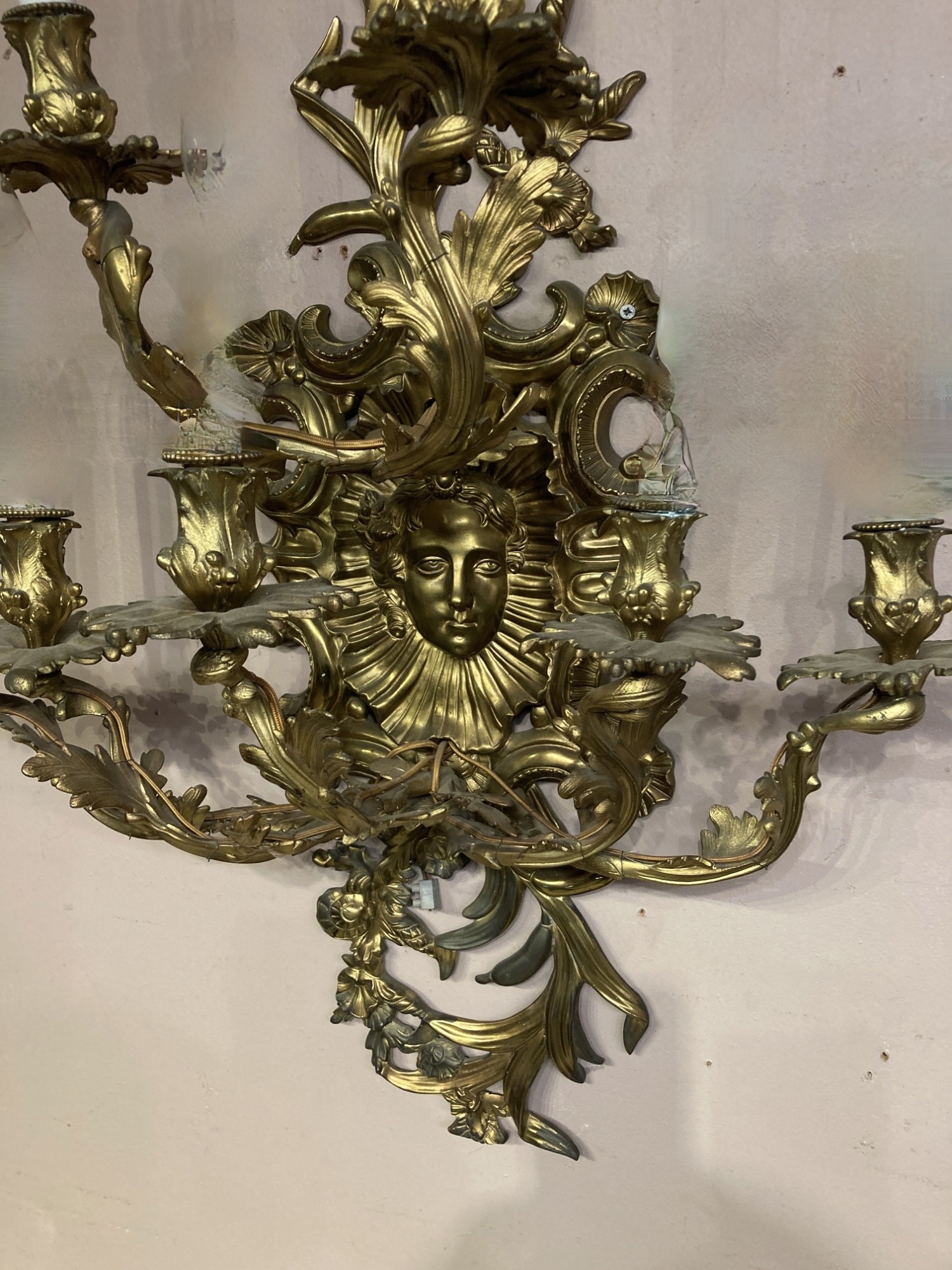
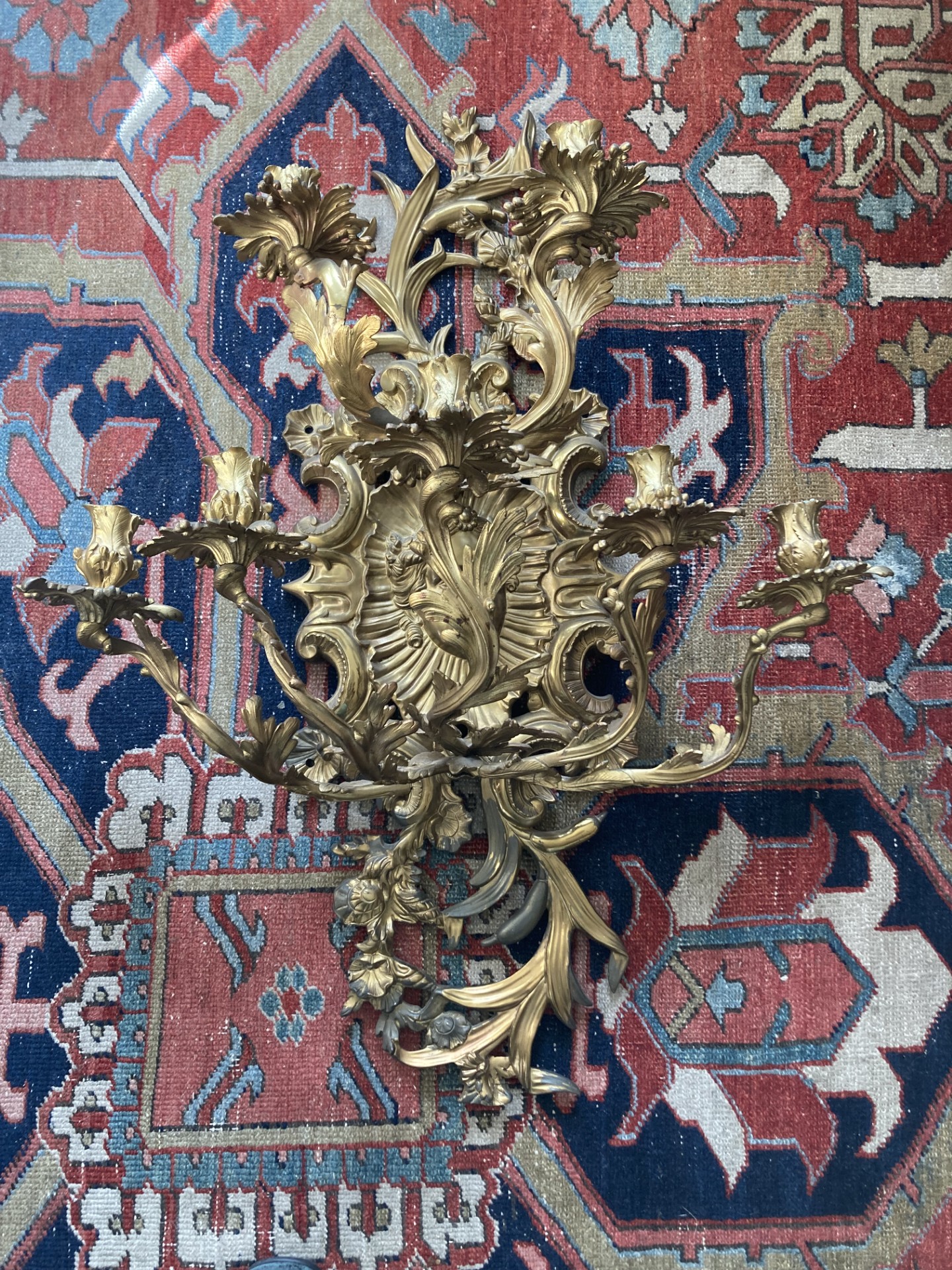
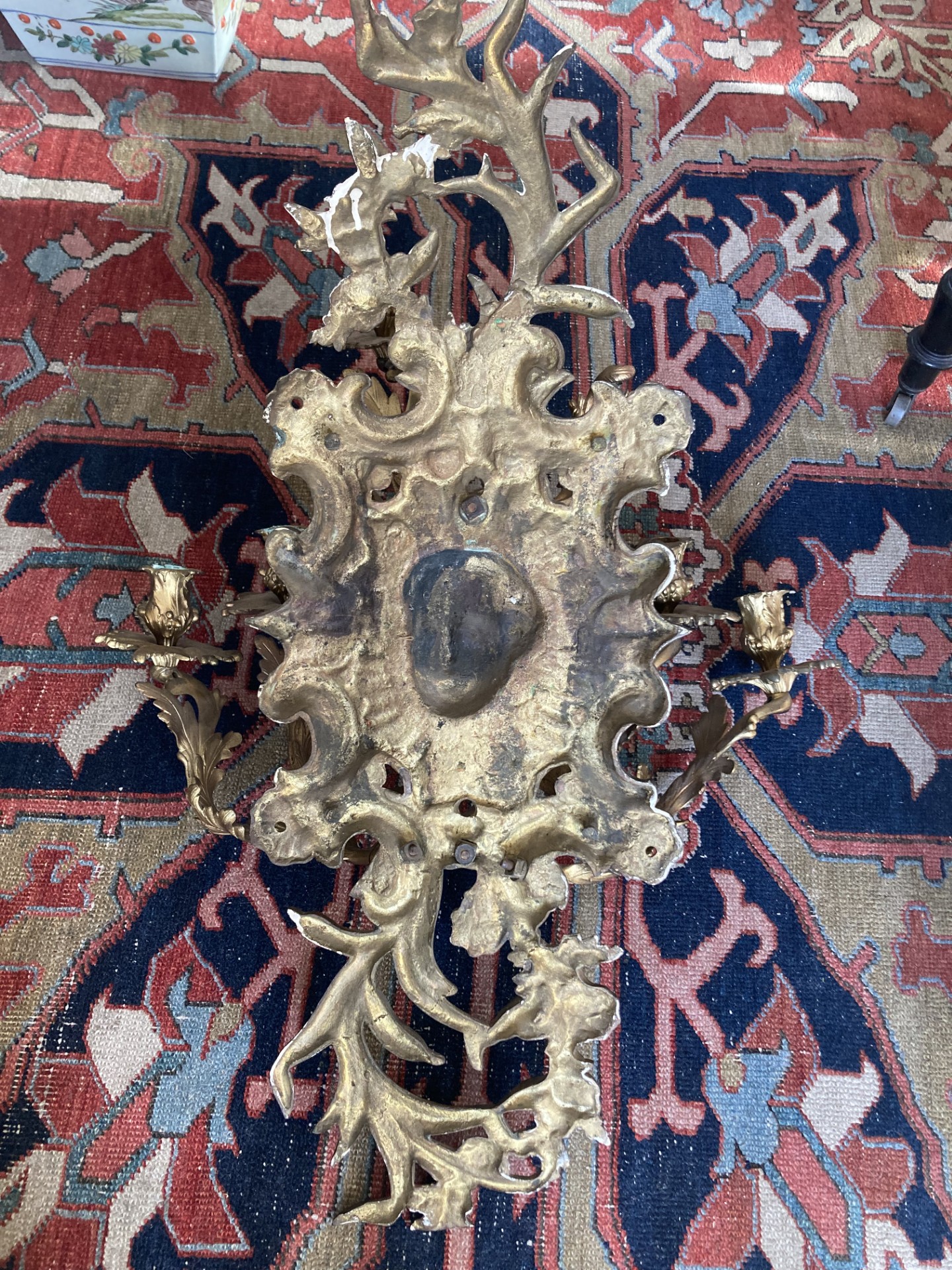
Extraordinary Large George II Rococo Ormolu Wall-Sconce
the seven scroll candle branches with leaf-cast nozzles and drip-pans issuing from a backplate formed of asymmetric scrollwork cast with flowers, bulrushes, foliage and shells centered by a mask of Amphitrite flanked by tridents
Reputedly made for the bedchamber of Maria, Lady Beckford’s bedroom at Fonthill Splendens, the Palladian Palace build by her husband, Alderman Sir William Beckford – the chimneypiece of this room was carved with a panel depicting the triumph of Poseidon and Amphitrite, his wife, and the pair of commodes made by John Channon (one in the Victoria & Albert Museum) for this room also incorporated aquatic symbols.
Birmingham had been a city of metal-founders since the Middle Ages and it was a securely based centre for this by the early 18th century. In the middle years of the 18th century designs and works became more ambitious reaching its apogée with the items produced by Matthew Boulton (1728-1809) in the second half of the 18th century. Matthew Boulton’s father had started the Soho-based foundry and, when he died in 1759, his son had already been running the business for some years. One of the most innovative producers was Thomas Turner, who established his ‘Brass House’ in Coleshill Street in 1740 . There were other founders applying for various patents etc. at this time, such as William Chapman and John Pickering, and the surviving pattern-books from the era show quite elaborate small-scale rococo artefacts such as watch-stands, handles and lock-plates for furniture etc.